
- -5%
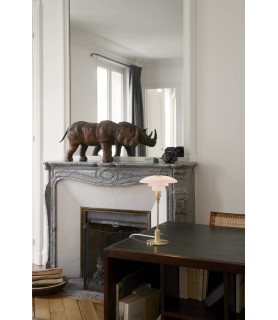
The PH system was developed to bring to households a completely unblemished surface lighting screen that was effective and more pleasant on the tables of most dining rooms at the time when electric lighting began to take over candlesticks with candles and kerosene lamps, in the late 1920s. Nevertheless, the first to be conquered by the functional and ultra-modern finish PH lamp system were the shops and public bodies. While the light screen became the preferred over the tables of most dining houses, the electric candelabra itself continued to be fitted with electricity and silk displays, in the late 1920s.
Based on the Poul Henningsen three-screen reflector system, this luminaire provides a gentle…
Todos los muebles en DecoDoos son 100% originales.

Envío gratuito a España en compras superiores a 75 euros.

¿Tienes dudas? Consúltanos.
The PH system was developed to bring to households a completely unblemished surface lighting screen that was effective and more pleasant on the tables of most dining rooms at the time when electric lighting began to take over candlesticks with candles and kerosene lamps, in the late 1920s. Nevertheless, the first to be conquered by the functional and ultra-modern finish PH lamp system were the shops and public bodies. While the light screen became the preferred over the tables of most dining houses, the electric candelabra itself continued to be fitted with electricity and silk displays, in the late 1920s.
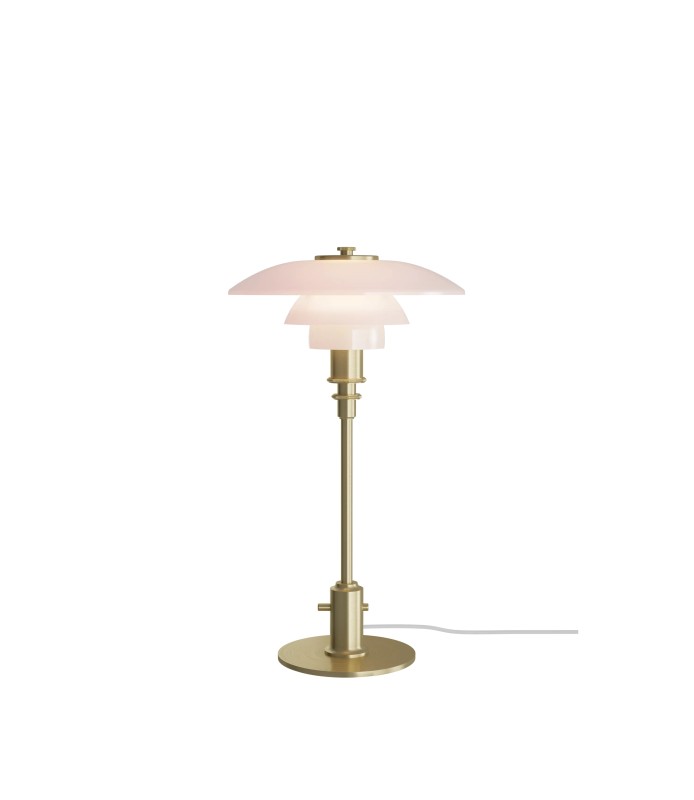
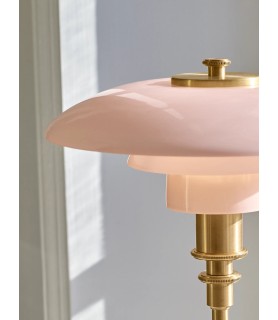
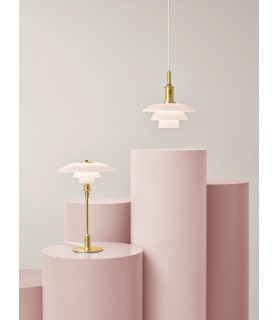
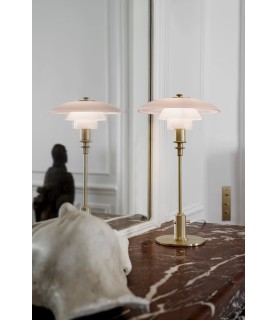
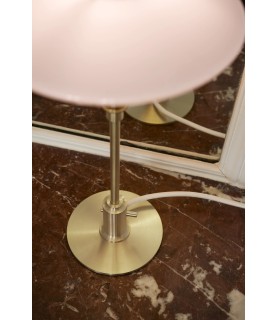
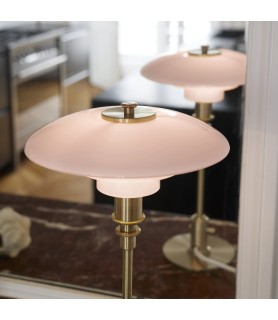
Based on the Poul Henningsen three-screen reflector system, this luminaire provides a gentle light emitted downwards and endowed with a wonderful brightness. Its hand-blown opal glass screens in pale pink are bright on its outer face and are endowed on its inner face with a white opal finish strewn with sand, to provide a gentle illumination to the evocative pair.
The PH system was developed to bring to households a completely unblemished surface lighting screen that was effective and more pleasant on the tables of most dining rooms at the time when electric lighting began to take over candlesticks with candles and kerosene lamps, in the late 1920s. Nevertheless, the first to be conquered by the functional and ultra-modern finish PH lamp system were the shops and public bodies. While the light screen became the preferred over the tables of most dining houses, the electric candelabra itself continued to be fitted with electricity and silk displays, in the late 1920s.
Based on the Poul Henningsen three-screen reflector system, this luminaire provides a gentle…